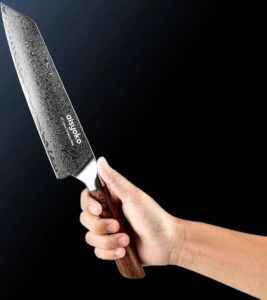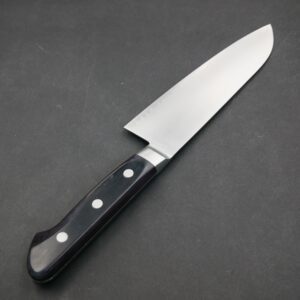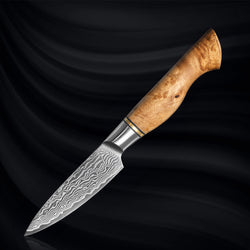
The main differences between high-carbon stainless steel and regular stainless steel knives revolve around their composition, performance characteristics, and maintenance requirements. Here’s a detailed comparison:
1. Composition
- High-Carbon Stainless Steel: This type of steel contains a higher percentage of carbon (typically around 0.6% to 1.5%) along with at least 10.5% chromium, which provides both hardness and corrosion resistance. The increased carbon content enhances the knife’s ability to achieve and maintain a sharp edge.
- Regular Stainless Steel: Regular stainless steel generally has lower carbon content (usually below 0.6%) and higher chromium levels, which prioritize corrosion resistance over hardness. This can result in a softer blade that may not hold an edge as well as high-carbon stainless steel.
2. Sharpness and Edge Retention
- High-Carbon Stainless Steel: Knives made from high-carbon stainless steel are known for their superior sharpness and edge retention. They can be honed to a finer edge and typically maintain that sharpness longer than regular stainless steel knives due to their hardness[1][3].
- Regular Stainless Steel: While regular stainless steel can also achieve sharpness, it often does not retain that edge as effectively as high-carbon variants. The softer nature of regular stainless steel means it may dull more quickly under heavy use[3][4].
3. Durability and Toughness
- High-Carbon Stainless Steel: These knives are generally more brittle due to the higher carbon content, making them susceptible to chipping if used improperly (e.g., cutting hard surfaces). However, they offer excellent wear resistance, allowing for prolonged use without frequent sharpening[2][4].
- Regular Stainless Steel: Regular stainless steel knives tend to be more flexible and less brittle, providing better impact resistance. This makes them suitable for a wider range of cutting tasks without the risk of chipping[3].
4. Corrosion Resistance
- High-Carbon Stainless Steel: While these knives offer good corrosion resistance due to their chromium content, they still require more maintenance than regular stainless steel knives to prevent rusting, especially if exposed to moisture or acidic foods[1][3].
- Regular Stainless Steel: Typically exhibits superior corrosion resistance compared to high-carbon stainless steel due to the higher chromium content, making them easier to maintain in humid or wet environments[4][5].
5. Maintenance Requirements
- High-Carbon Stainless Steel: Requires more attentive care, including regular cleaning and drying after use to prevent rusting. Sharpening can be more challenging due to the hardness of the steel, requiring specific techniques or tools[2][3].
- Regular Stainless Steel: Easier to maintain overall; they can often be washed in a dishwasher (though hand washing is recommended) and require less frequent sharpening due to their softer nature.
Conclusion
In summary, high-carbon stainless steel knives excel in sharpness and edge retention but require more maintenance and care compared to regular stainless steel knives, which offer greater corrosion resistance and durability at the cost of edge performance. The choice between the two ultimately depends on personal preferences regarding performance versus ease of maintenance in culinary tasks.